Providing insight into our product roadmap and, subsequently, the projects being worked on in our six-week cycles.
Cycle Seven In Review
This cycle ran from November 2025 through January 2026 and focused on finalizing major financial sustainability feature work, improving user onboarding and security, and tidying up platform infrastructure.
We launched a campaign we’ve been considering for some time to redesign the dashboard sidebar navigation. The sidebar plays an important role in welcoming new users to the platform. It indirectly conveys the platform’s story and capabilities. This is especially true for Fiscal Host organizations. Over the years, we’ve introduced many more features, and the sidebar has become confusing and unwelcoming. We are tackling this as part of our effort to make the platform more welcoming to new organizations.
During this cycle, we started by:
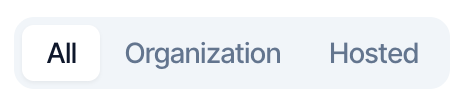
- Establishing a top-level “All / Organization / Hosted” filter that will show up in more dashboard tools. It enables the host to clearly view and decide which financial information to see: all financial activities, only financial activities associated with their organizational money, or only financial activities associated with their hosted Collectives. We’ve created a unified tool for incoming contributions that uses this filter.
- We’ve split the Expected Funds tool into two separate tools:
- Expected Funds remains dedicated to potential incoming funds documented by Fiscal Host admins (and in the future, perhaps even Collectives).
- Incomplete Contributions are now a separate tool. These contributions were created when contributors completed the contribution flow and selected a manual bank transfer as the payment method. Some of these may eventually be reconciled with bank transfers, and some will expire over time.
- The Sidebar layout has been updated to be full-height, scrollable, minimisable, and expandable.
We’re moving on with the next steps of the sidebar reorganization work in our next cycle.
We’ve upgraded the onboarding processes for both new organizations and new Collectives.
- The new onboarding experiences direct new users to their new organization (or Collective) accounts. In the past, they would have had to create personal accounts first, then organization (or Collective) accounts.
- The new onboarding experience is more secure.
- Organization and Collective profiles now offer a welcome experience that explains what they can do with the platform and provides step-by-step guides for setting up their organizations based on their goals.
Independent Collectives have been fully converted to Organizations. All current independent Collectives were identified and migrated, code paths were updated, and references to “Independent Collectives” were removed from the UI and documentation.
The team completed initial planning and design for requiring users to have a verified PayPal account when submitting expenses. The first task – defining requirements and updating related documentation – was finished this cycle. The project was paused due to PayPal’s failure to respond to our OAuth API application request. We received an answer a few days ago and will be able to prioritize implementation in an upcoming cycle.
In addition, we introduced two new dashboard tools for Fiscal Host: - We upgraded the Fiscal Host dashboard “People” tool from a proof of concept to an MVP and released it to users for beta testing. The initial responses have been good, and we are already planning follow-up work to further improve it and prepare it for full release.
- We introduced basic Know Your Customer (KYC) capabilities that enable Fiscal Hosts to better defend against potential fraud and money laundering and to demonstrate compliance with financial regulators. Fiscal Hosts can document and track manual identity verifications and import verifications from an automated KYC provider. We will continue to gradually explore deeper KYC integration in the coming cycles.
This catch-all category covered a variety of planned maintenance tasks. We resolved more than a dozen bugs and made incremental improvements across the platform. Examples include fixing user settings UI issues, optimizing dashboard performance, tightening security checks on form submissions, and cleaning up backend logging. Each of the 15 listed fixes was implemented and tested.